Editorial coverage · Guides

A reader's guide to following competitive esports

The guides below are the editorial reading list. Each piece is a literacy primer: how to read a bracket, how to read a draft, how to read a map veto, how to read a points table, how to verify a roster change, how to follow a patch cycle.

guides banner editorial photograph
The reading list

Six guides the editorial desk maintains

Each guide below is a literacy primer. Reading the bracket is the first step in reading the calendar; reading the draft is the first step in reading the round; reading the patch is the first step in reading the season.

How to read a bracket

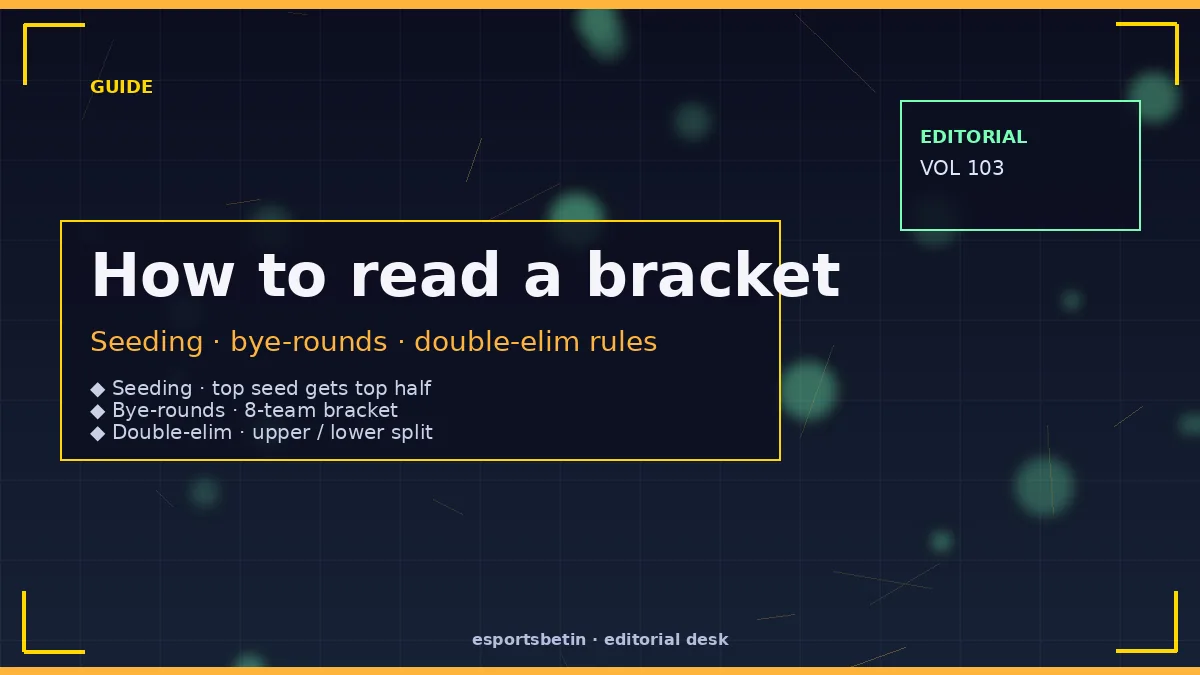
Single-elimination, double-elimination, GSL and Swiss. A short reader on the four formats the editorial desk encounters most.

How to read a draft

Pick and ban phases, role economy, flex picks. A primer on the language of the draft.

guide how to read bracket editorial photograph

A bracket is a procedural statement

Single-elimination says one loss ends the run. Double-elimination says the second chance is built into the format. GSL says the second match is the most informative. Swiss says depth wins over single peaks. A reader who knows the format can predict the calendar.

How the editorial desk reads a guide

The guide is the source of the chapter. The desk reads the guide as a literacy primer; the primer is the editorial record. The six guides the desk covers — how to read a bracket, how to read a draft, how to read a map veto, how to read a points table, how to verify a roster change, how to verify a patch cycle — each carry a specific literacy; the literacy is the editorial authority.

The guide is the source of the trade. The trade is what the reader gives up to take the literacy; the reader who accepts the trade is the editorial authority for the season. The guide is the source of the chapter; the held-back tier is set on facts that are not yet published: the live score, the highlight reel, the regional broadcast partner.

How to read a bracket

A single-elimination bracket ends with one loss. The format is the simplest of the four formats the desk covers; the calendar is the shortest. The team's first decision is the seeding; the second decision is the path. The path is the source of the bracket; the team that emerges from the bracket has, by the end, the most complete picture of the patch and the meta.

How to read a draft

The pick-and-ban phase is the language of the draft. The team bans the operators or characters that the opponent would otherwise play; the team picks the operators or characters that the team is willing to play. The pick-and-ban phase is the source of the draft; the desk reads the phase as a record of the team's preparation.

How to read a map veto

The veto order is the sequence of bans and picks. The team bans the maps that the opponent would otherwise play; the team picks the maps that the team is willing to play. The veto order is the source of the map pool; the desk reads the order as a record of the team's preparation.

How to read a points table

The round differential is the record of the season. The team that has the highest round differential is the team that has won the most rounds; the round differential is the source of the standing. The desk reads the round differential as the team's record; the organizer publication is the source.

How to verify a roster change

A roster change is the publication chain of the team encyclopedia. The desk reads the change against the organization publication and a partner outlet; the change is logged when both sides confirm. The desk holds the change until the verification tier is settled.

How to verify a patch cycle

A patch cycle is a release, a digestion, and a tournament. The release is the moment the public version is published; the digestion is the practice room; the tournament is the first qualifier. The desk reads the cycle as a record of the season; the editorial authority is the publisher patch notes.

What the desk does not read

The desk does not read live market data. The desk does not read real-money wagering data. The desk reads the guide as a literacy primer; the primer is the editorial record. The desk does not publish a wagering proposition; the desk publishes the primer.

The guide's editorial record

The guide is the source of the chapter. The reader can check the guide against the partner outlet; the partner outlet is the source. The guide is the editorial record; the record is the source of the chapter; the chapter is the editorial commitment.

The guide is updated when a verification tier is settled. The held-back tier is set on facts that are not yet sourceable. The guide is the desk's contract with the reader; the reader can check the guide against the source chain.

How to read the desk's coverage

The desk publishes six guides. Each guide is the source of the chapter; the chapter is the editorial commitment. The desk reads the guide as a record of the season; the editorial authority is the editorial methodology.

The bracket guide is the first guide. The bracket is the source of the chapter; the chapter is the editorial commitment. The desk reads the bracket as a record of the season; the editorial authority is the format's grammar.

The draft guide is the second guide. The draft is the source of the chapter; the chapter is the editorial commitment. The desk reads the draft as a record of the season; the editorial authority is the team encyclopedia.

The map veto guide is the third guide. The veto is the source of the chapter; the chapter is the editorial commitment. The desk reads the veto as a record of the season; the editorial authority is the format's grammar.

The points table guide is the fourth guide. The points table is the source of the chapter; the chapter is the editorial commitment. The desk reads the points table as a record of the season; the editorial authority is the format's grammar.

The roster change guide is the fifth guide. The roster change is the source of the chapter; the chapter is the editorial commitment. The desk reads the roster change as a record of the season; the editorial authority is the organization publication.

The patch cycle guide is the sixth guide. The patch cycle is the source of the chapter; the chapter is the editorial commitment. The desk reads the patch cycle as a record of the season; the editorial authority is the publisher patch notes.

The guides work together as a literacy primer. The primer is the source of the chapter; the chapter is the editorial commitment. The desk reads the primer as a record of the season; the editorial authority is the editorial methodology.

The reading cycle for the guides is open-ended. The cycle is the source of the chapter; the chapter is the editorial commitment. The desk reads the cycle as a record of the season; the editorial authority is the editorial methodology.

The desk reads the editorial methodology on every guide. The methodology is the source of the chapter; the chapter is the editorial commitment. The desk reads the methodology as a record of the season; the editorial authority is the editorial methodology.

Watch the stage
Open the broadcast
PLAY NOW