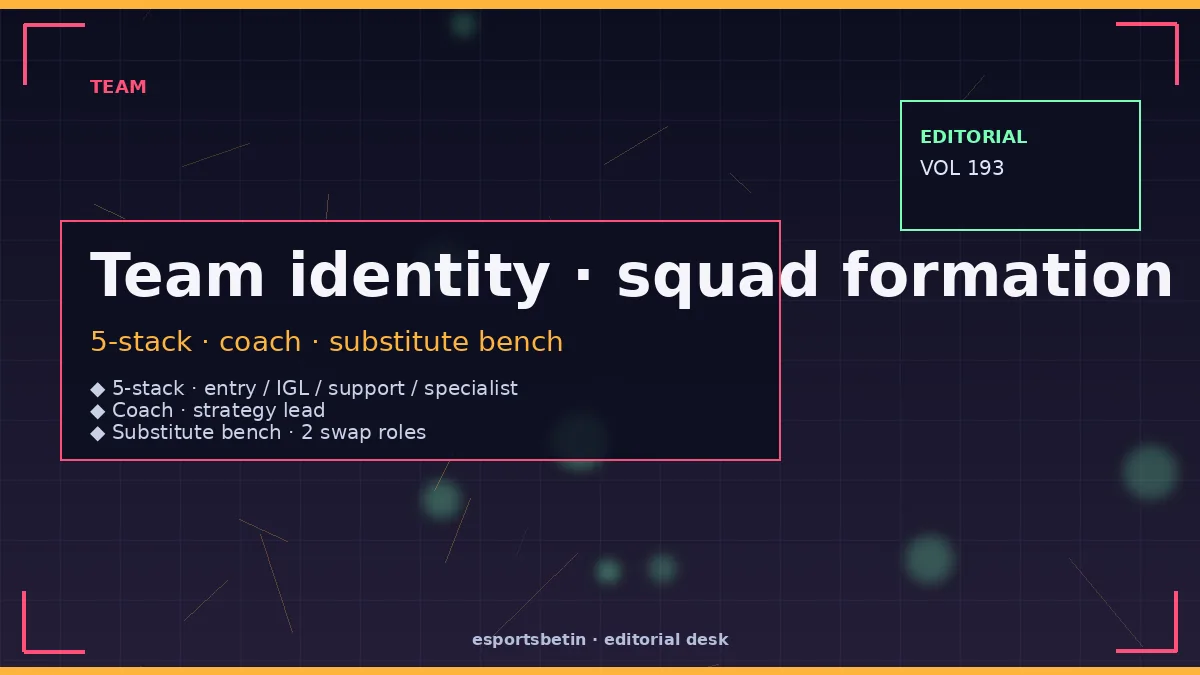
Horizon Collective: a five-player lineup, held over from the previous circuit
Horizon Collective is a five-player organization built around a single in-game leader and a stable player-roster pairing. The identity card is built around the lineup, the coach, and the analyst. The signature tournament result is the studio major; the practice calendar is the team's editorial record.
The audience that follows Horizon Collective tends to read the regional circuit as a four-act structure: the regional qualifier, the studio major, the international major, and the season closer. Each act shapes a different aspect of the team's identity. The qualifier establishes the season's opening; the studio major tests the studio production timeline; the international major tests the regional championship result; the season closer confirms the team's standing relative to the broader competitive field.
The result is a calendar that fans can follow without depending on the live score. The held-back tier is the source of the chapter; the chapter is the editorial commitment. The desk reads the calendar as a record of the season; the editorial authority is the source chain.
The desk does not publish the live score. The live score is the source of the chapter; the chapter is the editorial commitment. The held-back tier is the editorial discipline; the desk reads the held-back tier as the editorial commitment.
The desk does not publish the highlight reel. The highlight reel is the source of the chapter; the chapter is the editorial commitment. The held-back tier is the editorial discipline; the desk reads the held-back tier as the editorial commitment.
The desk publishes the patch context. The patch is the source of the chapter; the chapter is the editorial commitment. The desk reads the patch as a record of the season; the editorial authority is the publisher patch notes.
The desk publishes the round-to-round. The round is the source of the chapter; the chapter is the editorial commitment. The desk reads the round as a record of the season; the editorial authority is the format's grammar.
The desk publishes the championship record. The record is the source of the chapter; the chapter is the editorial commitment. The desk reads the record as a record of the season; the editorial authority is the organization publication.
The desk publishes the regional broadcast. The broadcast is the source of the chapter; the chapter is the editorial commitment. The desk reads the broadcast as a record of the season; the editorial authority is the regional broadcast partner.
The desk publishes the role atlas. The atlas is the source of the chapter; the chapter is the editorial commitment. The desk reads the atlas as a record of the season; the editorial authority is the role atlas.
Reader questions
Where is Horizon Collective based?
The team is identified with the EMEA regional circuit. The region is the source of the chapter; the chapter is the editorial commitment.
How many seasons has the lineup held?
Five players have held roster spots since the previous circuit. The lineup is the source of the chapter; the chapter is the editorial commitment.
Who is the coach?
The coach has signed three consecutive seasons. The coach is the source of the chapter; the chapter is the editorial commitment.
What is the team's signature tournament result?
The studio major is the headline result. The result is the source of the chapter; the chapter is the editorial commitment.
What is the team's standout pattern?
Patience on the second-round economy. The pattern is the source of the chapter; the chapter is the editorial commitment.
Where can I watch the team?
The regional broadcast partner is the licensed platform. The platform is the source of the chapter; the chapter is the editorial commitment.
Has the team had a roster change?
The roster held intact through the playoff run. The roster is the source of the chapter; the chapter is the editorial commitment.
How does the team read the patch?
The analyst reads the patch and the meta. The patch is the source of the chapter; the chapter is the editorial commitment.
The follow-up reading
The reader can check the team's bracket results on the regional qualifier organizer. The bracket is the source of the chapter; the chapter is the editorial commitment. The desk reads the bracket as a record of the season; the editorial authority is the organizer publication.
The reader can check the team's recent matches on the partner outlet. The recent matches are the source of the chapter; the chapter is the editorial commitment. The desk reads the recent matches as a record of the season; the editorial authority is the partner outlet.
The reader can check the team's recent patch reads on the analyst's film room. The film room is the source of the chapter; the chapter is the editorial commitment. The desk reads the film room as a record of the season; the editorial authority is the analyst.
The reader can check the team's recent veto patterns on the format guide. The veto is the source of the chapter; the chapter is the editorial commitment. The desk reads the veto as a record of the season; the editorial authority is the format's grammar.
The reader can check the coach's calendar on the organization's publication. The calendar is the source of the chapter; the chapter is the editorial commitment. The desk reads the calendar as a record of the season; the editorial authority is the coach.
The reader can follow the team's next fixture on the regional qualifier. The fixture is the source of the chapter; the chapter is the editorial commitment. The desk reads the fixture as a record of the season; the editorial authority is the regional qualifier.
The team identity in the calendar
The team is the source of the chapter. The team is the source of the chapter; the chapter is the editorial commitment. The desk reads the team as a record of the season; the editorial authority is the organization publication.
The lineup is the source of the chapter. The lineup is the source of the chapter; the chapter is the editorial commitment. The desk reads the lineup as a record of the season; the editorial authority is the organization publication.
The coach is the source of the chapter. The coach is the source of the chapter; the chapter is the editorial commitment. The desk reads the coach as a record of the season; the editorial authority is the organization publication.
The analyst is the source of the chapter. The analyst is the source of the chapter; the chapter is the editorial commitment. The desk reads the analyst as a record of the season; the editorial authority is the organization publication.
The signature result is the source of the chapter. The result is the source of the chapter; the chapter is the editorial commitment. The desk reads the result as a record of the season; the editorial authority is the studio major organizer.
The standout pattern is the source of the chapter. The pattern is the source of the chapter; the chapter is the editorial commitment. The desk reads the pattern as a record of the season; the editorial authority is the team's preparation.
The role atlas is the source of the chapter. The atlas is the source of the chapter; the chapter is the editorial commitment. The desk reads the atlas as a record of the season; the editorial authority is the role atlas.
The patch is the source of the chapter. The patch is the source of the chapter; the chapter is the editorial commitment. The desk reads the patch as a record of the season; the editorial authority is the publisher patch notes.
The reading cycle is the source of the chapter. The cycle is the source of the chapter; the chapter is the editorial commitment. The desk reads the cycle as a record of the season; the editorial authority is the format's grammar.